Why Cumbrian Damsons Taste Different: A Guide to the Lyth Valley Harvest
By early September the Lyth Valley has a smell to it: bruised fruit, damp grass, a faint sweetness drifting out of orchards that most visitors never notice from the main road. The valley runs south from Kendal towards Windermere, a shallow bowl of small fields, limestone walls and old trees. For a few weeks each autumn it produces one of the most distinctive fruits in England — and then, almost as quickly, the season is over.
What the Valley Does to a Damson
Terroir is a word usually attached to wine, but it applies here. The soils are thin and stony, sitting over limestone, and they drain quickly. Damp air moves in off Morecambe Bay and lingers between the fells, so the valley is mild and humid rather than harsh. The surrounding hills shelter the orchards from the worst of the wind.
A damson on poor, free-draining ground grows smaller than one on rich soil, and that is the point. Smaller fruit means a higher proportion of skin and stone to flesh, and it is the skin that carries the perfume and the sharpness. Lyth Valley damsons are not sweet plums. They are dense, dark and bracingly acidic, with a flavour closer to sloe than to dessert fruit, and they hold that character through cooking in a way softer plums do not.
There is history in the mix too. Damsons have been grown here so long — and the Westmorland damson so often propagated from local suckers rather than bought in — that the trees in these orchards are effectively a local strain. They also flower late, in May, which usually steers them clear of the frosts that wipe out earlier blossom in other valleys. That timing is a large part of why the Lyth Valley, rather than somewhere else in Cumbria, became damson country.
Damson, Sloe or Bullace?
People mix these up constantly, particularly in hedgerow season. If you are picking, get it right — the three behave very differently in the pan.
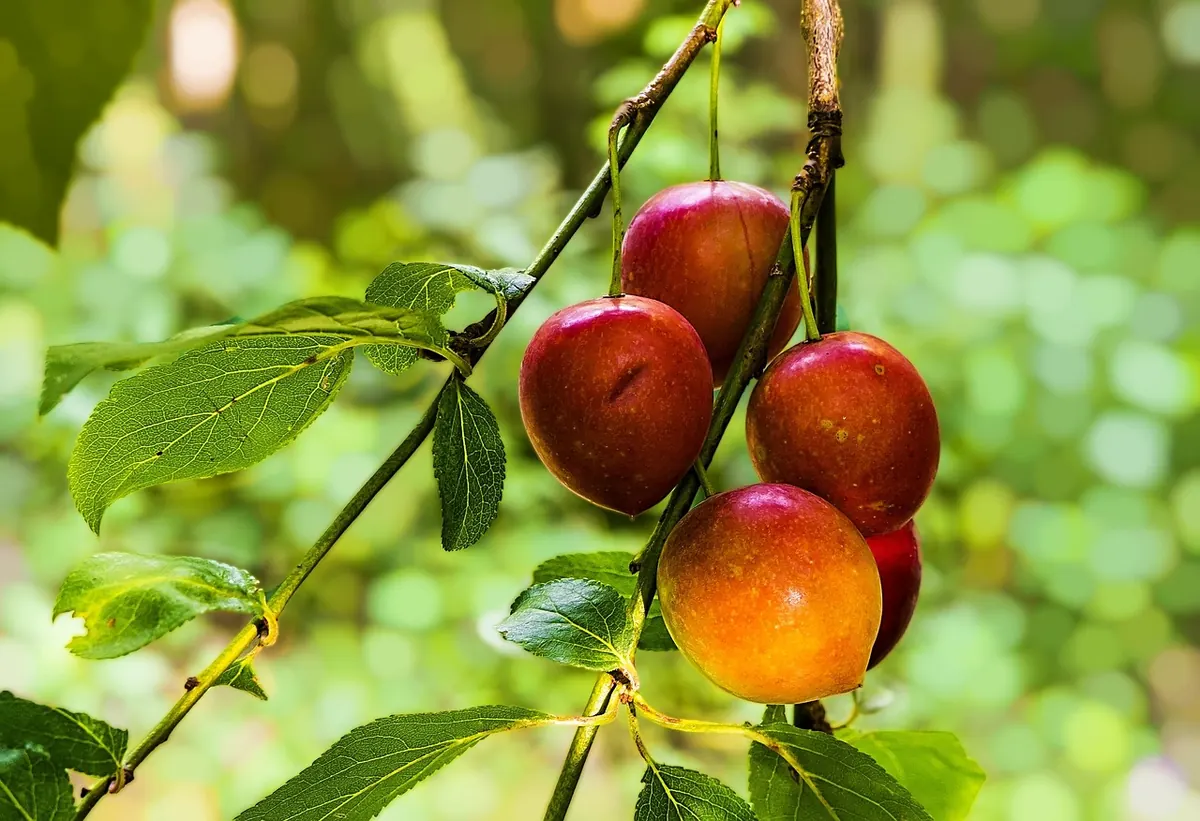
- Damson: oval and pointed at one end, roughly the size of a large olive, deep blue-black under a powdery grey bloom. Flesh is greenish-gold. Sharp, aromatic, and it stains everything it touches.
- Sloe: the fruit of blackthorn, smaller and rounder, with a hard, mouth-drying astringency. Traditionally picked after the first cold snap. Good for gin, harsh to eat.
- Bullace: rounder and often larger than a damson, sometimes greenish or yellow as well as blue-black, and noticeably sweeter. Less common in orchards, more often found in old hedges.
The giveaway is the shape. Roll a damson in your palm and you will feel the point; a sloe is a small, hard sphere.
The Harvest Window
Picking starts in the last days of August in the earliest orchards and runs through September, with some fruit hanging into early October. Growers watch the bloom and the weather rather than the calendar. A damson is ready when it comes away from the spur with a gentle twist, still firm, the skin tight and the bloom unbroken.
Practical points matter more than romance here:
- Pick dry. Wet fruit moulds fast.
- Use shallow trays or boxes and do not pile fruit deep.
- Twist or snip rather than yank — you are protecting next year's spurs.
- Wear old clothes and gloves. Damson juice is permanent.
- Leave the ones you cannot reach. The wasps and birds are working the same trees, and the fruit at the top is often the best.
If you want damsons for gin, many growers deliberately leave them a little longer, until the fruit is fully coloured and the flavour deeper. For jam, slightly under-ripe fruit gives a cleaner set.
From Orchard to Kitchen
Damsons are high in pectin, which means they set easily and forgive a cook who is nervous about jam. They also freeze well: spread them on a tray, freeze, then bag them, and you can pull out a handful in January for a crumble.
Beyond jam, the fruit works in chutney and ketchup, in fruit cheeses cut into cubes and eaten with cheese, in sauces for duck, lamb or venison, and in ice cream. Damson gin is the region's signature drink. One warning worth remembering: do not crack or crush the stones. Discard them, and if you are making gin, strain the liquid off rather than leaving the fruit in indefinitely.
Where to Buy and Taste
Fresh Lyth Valley damsons are a short-season, low-volume crop. You will not find them in most supermarkets. Look instead at farm shops around Kendal and Windermere, at the farmers' markets in Kendal and Ulverston, and at delis in Ambleside, Hawkshead and Cartmel. Ask who grew them — most traders will tell you the orchard.
In spring, the Westmorland Damson Association's Damson Day celebrates the blossom with orchard walks and stalls selling trees, gin, cakes and preserves; it is also the easiest place to find out which growers sell direct. Outside September you can still eat the fruit as jam, chutney, gin and ice cream from Cumbrian producers, and pubs and restaurants across the south Lakes use damsons in sauces and puddings when they can get them. Pick-your-own damson orchards are rare, so ask a grower directly — and expect to be told to come back next week.
Making the Season Last
If you bring home a box of damsons, deal with them the same day. Sort out any bruised fruit, freeze what you will not use within a few days, and start the gin straight away: fill a jar with pricked damsons, cover with gin, add sugar to taste after a month or two, shake weekly, and leave it in a dark cupboard for around three months before straining.
If you have space, plant a tree. Damsons are hardy, crop reliably in Cumbria and can be grown as a bush or half-standard, and they will fruit in a garden that would defeat most plums. That is, in the end, how the Lyth Valley got its orchards in the first place — one tree at a time, on farms that found the fruit suited the ground. A century later, the taste still carries the place.
Photo: Felix-Mittermeier / Pixabay